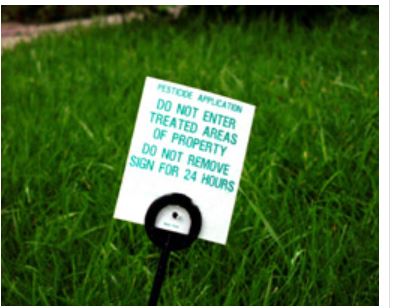
What is salt brine? Salt brine is a solution of salt (sodium chloride, or NaCl) and water. It has a much lower freezing point than freshwater, and is a useful tool in reducing the adhesion of snow and ice to road surfaces. While some brine cocktails are exclusively saltwater, some include calcium chloride or magnesium chloride. See link for more detail.
Author Archives: dutchessemc
Plastic-Free Back to School Guide

- Invest in Reusable Foodware For Plastic-Free, Zero-Waste Snacks and Lunches
- Buy In Bulk, Bring Your Own Containers and Shop Local
- Check Your Office, Shelves, Desk, and Closet for School Supplies Before You Buy
- Get New (To You) Clothes By Buying Secondhand
- Use This As An Opportunity To Educate Your Child
For detail information on each of the Tips follow the link to Beyond Plastics
Use Less-Toxic Products

We put ourselves, our families, and our pets at risk when we use herbicides, pesticides, highly corrosive products like drain cleaners, and toxins like ammonia and bleach. Sewage treatment plants don’t eliminate these chemicals, and many find their way into our air, water and ecosystems.
Fortunately, there are safer alternatives that work just as well. By choosing a non-toxic option or the least toxic product, you can protect yourself and the environment. Click on the following link for more information, DEC
Submitted by Candice Merrill
DC Urban Trail Project
The trail is to be built on the old Railroad ROW that was used to transfer trains from the Hudson Line to the former Maybrook Line (WRSDRT, Walkway over the Hudson and now Empire State Trail). It will start by the Sewage Treatment plant, just south of Marist, run up into the Former Hudson River Psychiatric Center and then back south past the Hospital to connect up with the DRT and Walkway. The survey is looking for input on how people will use the trail as a basis for its design. Please check it out and provide input.
Brad Barclay, Senior Planner
DC Department of Planning and Development
A Zero Waste Meal

Recently, my family gave me a wonderful birthday gift of a zero waste meal. At least it was zero waste for us. There was certainly some waste from the processing of the food before it got to us. But, we deposited nothing into the trash from the meal, which was a great feeling.
There was a time when I thought the world would be saved because we could send plastic, metal, glass and paper off to be recycled. It felt good to take these items to a recycling center as opposed to the landfill. But it turns out that there is an enormous cost to recycling. Let’s consider plastic. So much of our products come packaged in plastic, which varies greatly in its chemical makeup. For that reason, recycling it is complicated. It must be sorted, packed into big cubes and shipped to a country that wants it. It then must be melted, a process that produces noxious fumes, and formed into pellets for resale to manufacturers. Oil companies, which produce the chemicals for making plastic, make it difficult to recycle plastic. They don’t make money if we recycle plastic, they make money selling us the raw material to make new plastic. So only a small proportion of the plastic produced can be recycled. And it can only be recycled once. Sadly, plastic production has skyrocketed and ends up in our oceans, rivers, streams and even our drinking water. It never breaks down entirely, it just gets smaller. But is it possible to live without plastic? The answer brings me back to the topic of this blog post. Continue reading
Tips to Reduce Food Waste
Each year, nearly 40 million tons of food is discarded by Americans. Equating to more than $161 billion, food waste accounts for approximately 30-40% of the U.S. food supply.
While cutting down on food waste reduces methane emissions from landfills and conserves energy – preventing pollution involved in the growing, manufacturing, transporting, and selling food – it can also save you money by buying less food.
Here are a few ways to reduce wasted food, according to the U.S. Environmental Protection Agency: Click Here
Climate Conversations: Climate Hope for the Hudson Valley
The first in Sustainable Hudson Valley’s fall series of climate conversations looks clearly at the quickening pace of climate change and growing risks faced by our communities, combined with the just-as-fast acceleration of movements taking direct, positive action to transform the way we live and work. Every other Friday from noon – 1:15 PM starting October 9, 2020 with this event.
Dave Conover, SHV’s Program Coordinator, is a lifelong educator who was recently trained by Al Gore’s Climate Reality Project. He will summarize the realities from science and personal experience. From teaching environmental science to non-scientists at Marist College to running the Clearwater’s educational programs, Dave has developed a unique overview of the Hudson Valley environment and honed his climate storytelling skills in the process.
Melissa Everett, SHV’s Executive Director, is a social scientist and skilled facilitator who is working with dozens of groups to convene a Regional Climate Action Planning process. She has been collecting data on regional climate action in renewable energy, transportation, materials and water management, agriculture, as well as documenting the emerging green economy in the region, climate justice issues, and the work underway to create resilient communities and educate the region for action.
The Hudson Valley was a birthplace of the first environmental movement to protect land, air and water. SHV is a leader in “the next environmental movement” to support new ways of living and working that restore economy, environment and the fabric of community. The Climate Conversations series brings people together for informative, inspiring discussions that shine the light on action opportunities for today. Free. Register here (required).
Next featured programs:
10/23/20 Juice: Electrification as Climate Strategy
A conversation on Marbletown’s plan to shift to 100% renewable energy, electrification as an underpinning of efficiency, the role of electric vehicles, storage and more. With Tom Konrad, Ph.D., Chair, Marbletown Environmental Conservation Commission and Seth Leitman, MPA, Program Manager, Drive Electric Hudson Valley. Register here (required).
11/6/20 Resilient Places: A Systems Approach
A conversation about placemaking for resilience and equity with Cynthia Nikitin, SHV Resilient Places Fellow. Register here (required).
11/20/20 The Repair Revolution
A conversation about taking control of your “stuff” and the emerging circular economy, with John Wackman and Elizabeth Knight, coauthors, Repair Revolution (2020, New World Library). Register here (required).
12/4 /20 Prospects for 2021
A round-up of strategies and predictions, special guests to be announced. Register here (required).
Join us!
Victoria Kelly
Manager of Environmental Monitoring Programs
Cary Institute of Eco System Studies
How to Compost in an Apartment
The benefits of composting
While you may not have peonies demanding a steady diet of nutrient-rich fertilizer, composting has other benefits. Not only can apartment dwellers use that black gold to feed house plants and patio containers, you can also reduce household waste and save yourself a trip to the dumpster.
CCE Earth Day STREAM-A-THON
Cancelled Earth Day activities have you feeling blue about being green? Cornell Cooperative Extension has the answer! CCE Dutchess County is partnering with CCEs across the Hudson Valley to bring you the Earth Day STREAM-A-THON! CCE educators and staff will be taking to social media to provide a day chock-full of short presentations pertaining to plastic recycling and reduction, energy efficiency, composting, and even a guided stream-side woods walk!
Take a break from your regular quarantine programming and join us live on our CCE Dutchess Facebook page (or on Zoom if you prefer!) throughout the day for some great information, resources, and all-around Earth Day fun! The schedule for the day and instructions on how to participate can be found on our website.
We would love to have you celebrate Earth Day with us in this new and exciting way! And if you would also like to help us promote the event on your social media you can just share our event on your page.
We hope everyone is staying safe and we look forward to celebrating Earth Day 2020 with you all!
Source: CCEDC Environment & Energy Team
Help Protect Your Garbage & Recycling Workers from COVID-19
| The Centers for Disease Control and Prevention (CDC) and the Solid Waste Association of North America (SWANA) have both issued guidance associated with the Coronavirus and waste management.
Do your best to help protect your local garbage and recycling workers who continue to serve as an essential function in our communities and collect our waste on a weekly basis. Best Practices
Recycle Right
Collection Tote Maintenance
Show your appreciation for your local garbage and recycling workers by leaving a thank you note. Keep Your Reusable Bag CleanNew York State’s ban on single-use plastic bags went into effect on March 1st, 2020. Reusable bags help us reduce waste and protect our environment. Are you trying out reusable bags but looking for best practices and information on cleaning them? Information is available from the New York State Department of Health. COVID-19 and Beverage Container RedemptionRecycling operations, including redemption of containers through the bottle bill are considered essential services. However, redemption centers should implement appropriate social distancing practices whenever and wherever possible. DEC recognizes that unintended consequences of the COVID-19 response may make full compliance with requirements challenging for certain facilities and result in temporary disruptions to required redemption operations. For more information on COVID-19 and Bottle Bill Beverage Container Redemption. Composting in the Time of COVID-19Tune into the United States Composting Council’s webinar series, Composting in the Time of COVID-19, especially if you are a municipal/commercial composter or food scraps hauler.
Show your appreciation and leave a thank you note for your local food scraps hauler. US Composting Council – Mentoring Program Now OpenThe United State’s Composting Council’s mentoring program is now open for applications – mentees and mentors! Tune into the April 17th webinar to hear from past mentors and mentees as well as the mentoring coordinator to answer your questions. The mentoring program helps young professionals between the ages of 21 and 40 with professional development as they grow their careers, personal capabilities and businesses in the composting industry. Mentors must be a USCC member, however mentees do not have to be members of USCC, but are encouraged to join throughout the year of mentorship. Applications are due by April 30, 2020. Wasted Food Warrior Tip of the WeekGot brown bananas? Turn those soft bruised bananas into delicious banana bread or ice cream. Store them in the freezer until you’re ready to use them. Compost Bin & Rain Barrel Sales
Conference, Workshops & Webinars:
Funding Opportunities – Application Deadlines
We Want To Hear From You!Is there a topic you’d like to learn more about or a public event or workshop related to recycling (organics, textiles, traditional recyclables, etc.) you’d like the greater community to know more about? E-mail us at organicrecycling@dec.ny.gov and it could be featured in an upcoming Solid Waste & Recycling Newsletter. |